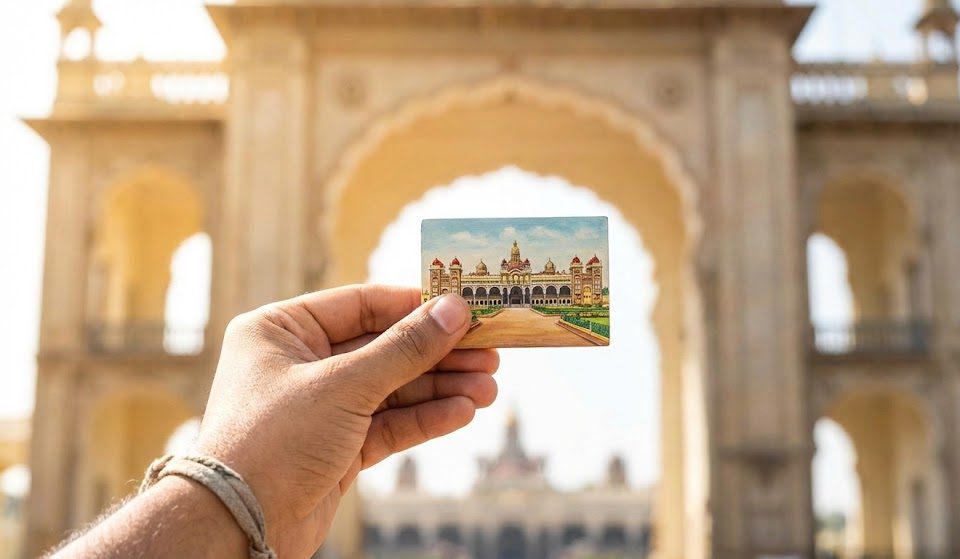
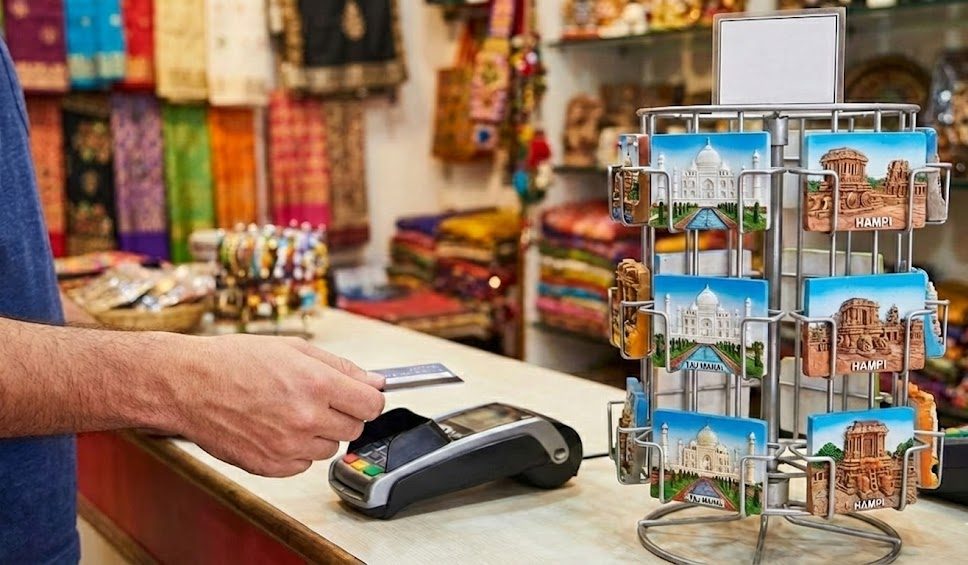
Look, we’ve been making magnets for years now, and somewhere between our 47,000th Taj Mahal and our 3,000th Gateway of India, we started having opinions. Strong opinions. The kind you probably shouldn’t have about tiny pieces of resin and metal, but here we are.
So we sat down with our design team—coffee in hand, sanity questionable—and did something absolutely nobody asked us to do: we ranked Indian monuments by how good they actually look on a magnet. Not how historically important they are. Not how beautiful they are in person. Just pure magnet aesthetic.
Let’s go.
The S-Tier: Born for This
Taj Mahal – Of course it’s here. We’re legally required to say this, but also… it’s just true. That dome? Those minarets? The symmetry? It’s like Shah Jahan knew magnets would be invented 400 years later and designed accordingly. The man was playing 4D chess. Every angle works. You literally cannot take a bad magnet photo of the Taj. We’ve tried.
Mysore Palace – Okay, we might be biased because we’re from Mysore, but LOOK AT IT. The illuminated version especially. All those lights, the Indo-Saracenic architecture, the perfect proportions. It’s basically begging to be miniaturized. Plus it’s our hometown hero, so it gets extra points for hometown pride. Sue us.
Gateway of India – Simple, iconic, instantly recognizable. Three arches, done. A child could draw it. That’s exactly what makes it perfect for magnet format. Sometimes less is more, and the Gateway gets it.
The A-Tier: Solid Performers
India Gate – Clean lines, recognizable silhouette, works great at sunset. Only reason it’s not S-tier is because it’s almost too simple. Like, we’ve had customers ask if it’s a fancy door. Sir, it’s the India Gate. But okay, we get it.
Hawa Mahal – Those windows! That pink sandstone! Jaipur’s pride and joy photographs like a dream and translates beautifully to magnet form. The only challenge? Fitting all 953 windows onto a 2-inch space. Our designers have nightmares about this, but the end result slaps.
Victoria Memorial – Kolkata’s white marble wonder. Looks expensive even when it’s a ₹50 magnet. That’s the kind of energy we respect.
The B-Tier: Good, But Complicated
Qutub Minar – Great monument, slight problem: it’s a tower. Towers are tricky on magnets. You either crop it (and lose the height drama) or you make a vertical magnet (which is weird). Still looks good though, especially with that red sandstone color.
Hampi Ruins – Stunning in person, kind of chaotic on a magnet. There’s just SO MUCH happening. Boulders, temple complexes, ancient vibes everywhere. We end up picking one chariot or one temple, and it feels like we’re doing Hampi dirty. Sorry, Hampi. You’re too vast for our tiny format.
Konark Sun Temple – Those chariot wheels are chef’s kiss, but explaining what you’re looking at in magnet form? Tough. People keep thinking it’s just a cool wheel design. Still cool though.
The C-Tier: We Tried
Ajanta & Ellora Caves – Incredible. Mindblowing. UNESCO World Heritage Sites. Terrible on magnets. Caves don’t photograph well when you shrink them to refrigerator size. They just look like brown blobs. We’ve tried every angle. The tourists love them in person, but the magnets… let’s just say they don’t move fast.
Sanchi Stupa – It’s a hemisphere. A very important, very ancient hemisphere. But on a magnet? It’s a half-circle. We add trees and context, but there’s only so much you can do. Great for Buddhism, tough for retail.
The “It’s Complicated” Tier
Meenakshi Temple – This one hurts because it’s GORGEOUS. The colors! The gopurams! The details! But there are approximately 33,000 sculptures on this temple, and our printer has limits. We do our best, but something is always lost in translation. People still buy them though, because even a mediocre Meenakshi magnet is stunning.
Red Fort – Big, sprawling, historically crucial. But which part do you put on the magnet? The Lahori Gate? A random wall? The whole complex? Identity crisis in architectural form.
The Plot Twist
Here’s the thing we learned: the monuments that work best on magnets aren’t always the most impressive ones in real life. Sometimes a simple, symmetrical structure beats an elaborate masterpiece when you’re working in 2×2 inches.
The Taj Mahal is peak magnet material partly because it’s drop-dead gorgeous, but also because it’s simple. One building, perfect symmetry, instant recognition.
Meanwhile, some of our most challenging (and rewarding) designs come from places like the Golden Temple in Bylakuppe or the backwaters of Kerala—not even monuments technically, but they capture something essential about India that translates beautifully to tiny format.
The Real Ranking
Honestly? After making thousands of these things, every monument has its moment. Some look better at sunrise. Some need the right angle. Some need to be cropped in ways that would make photographers cry.
But that’s the fun part. We’re not just slapping images on magnets—we’re trying to capture why someone fell in love with a place, squeezed into something small enough to stick on their fridge between grocery lists and kid drawings.
So yeah, the Taj Mahal is S-tier for magnet aesthetics. But your local temple that nobody’s heard of? That weird roadside monument your hometown is proud of? Those have their own magic.
And honestly, those are the magnets we’re most proud of making.
Got opinions about our ranking? Think we did your favorite monument dirty? Drop a comment. Our designers love a good argument almost as much as they love symmetrical architecture.
 GD Souvenirs